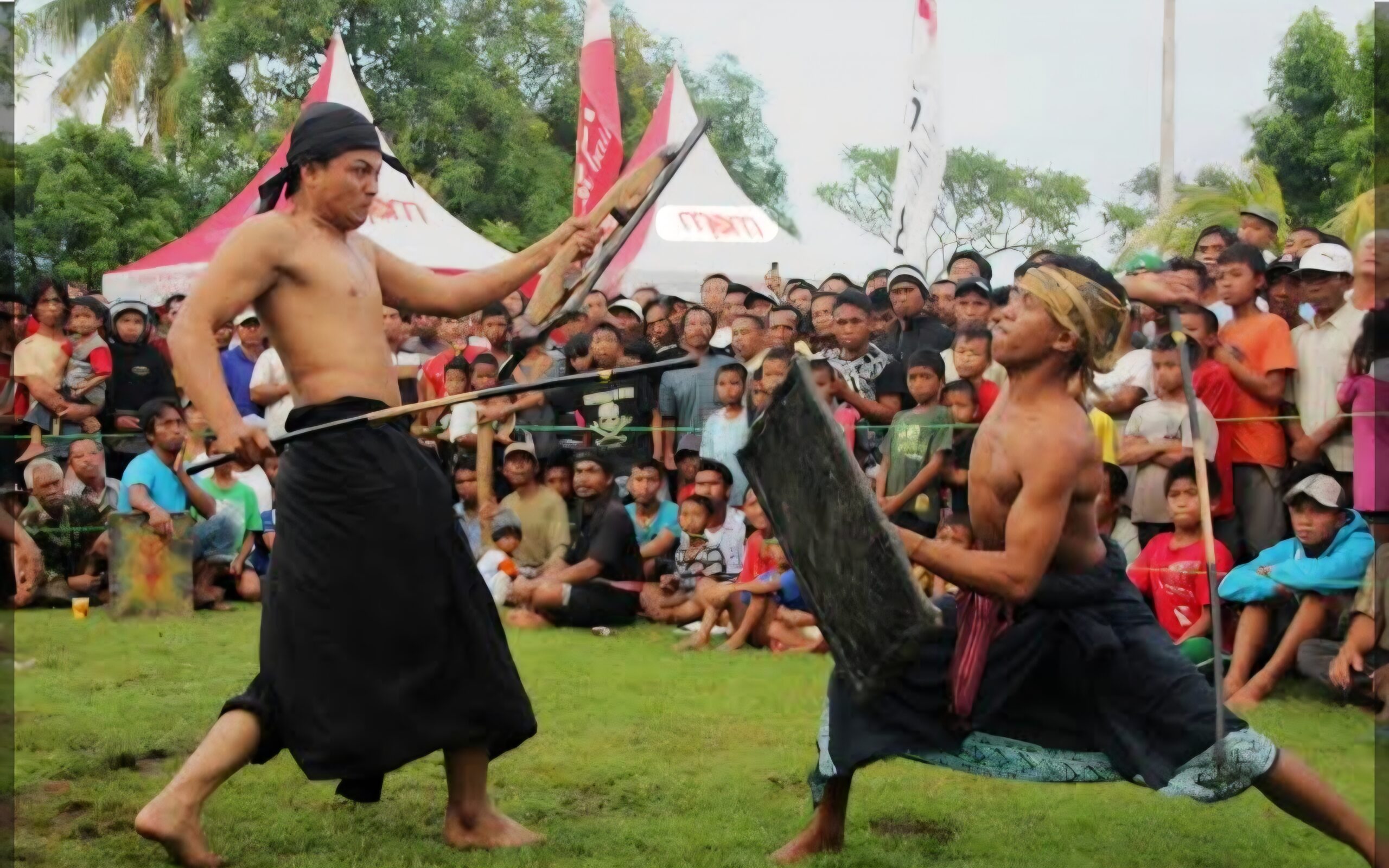
In the world of Peresean, a traditional martial art of the Sasak people in Lombok, the terms “tanding mati” and “mati tanding” are often heard and sometimes misunderstood by the public and social media users. Many netizens mistakenly interpret both expressions as fights “to the death” or extremely brutal contests. However, this interpretation is incorrect.
Although the terms sound similar, they carry different meanings within the cultural and technical context of Peresean.
Tanding Mati
Tanding mati refers to a match where two pepadu (traditional fighters) are directly paired and face each other in the arena. The confrontation takes place spontaneously in the arena setting, where both fighters meet and compete under agreed traditional rules of Peresean.
Mati Tanding
On the other hand, mati tanding refers to a match that has been pre-arranged or scheduled in advance. In this context, both pepadu have already agreed to meet at a specific time and location. The pairing is fixed and cannot be changed arbitrarily.
Because it is formally announced ahead of time, mati tanding matches are often among the most anticipated events for Peresean enthusiasts and local audiences.
Cultural Significance
Despite their differences in meaning, both terms have become an integral part of the vocabulary and tradition of Peresean. They reflect the richness of Sasak cultural expression—not only in terms of physical performance and combat artistry, but also in the linguistic and social meanings developed within the community of pepadu and cultural observers.
Peresean continues to stand as a living heritage of the Sasak people, blending sport, ritual, and cultural identity into a unique traditional performance that is still widely practiced and celebrated today. (lombokexpress.id)